
The complete guide
How to use AI in medtech marketing.
How a medtech creative studio uses AI every day, where it saves real money, and where it still needs a person with clinical accountability.
Use AI for the front end of content: ideas, calendars, posts, articles, sales tools and storyboards. Keep a creative director and clinical review over everything that ships, and keep finished animation in a traditional 3D pipeline.
- AI gets you about 80% of the way. The last 20% is where clinical accuracy lives.
- Three tools do most of the work: Claude with Projects, voice dictation and Figma.
- The front end of content now costs a fraction of what it did.
- A finished MOA animation is still made by people.
AI is the associate, not the director.
Fast, tireless and genuinely creative. Still the associate.
AI has been the best associate creative director we’ve ever worked with. It generates options, moves fast on execution and brings fresh takes to the table.
What it doesn’t carry is accountability. The creative director makes the judgment calls, weighs the client relationship and answers for whether the work holds up in clinical review and in the sales cycle.
That’s the honest frame for MedTech. AI is a capability multiplier, not a decision maker. In an AI-powered workflow, the creative thinking is the product. The production is the tool.
Where it fits
Where AI fits in a medical device animation.
Our four-stage process is conversation, script, storyboard and build. AI doesn’t plug in evenly. Some stages are dramatically faster with it, and one isn’t touched by it at all.
- 01
Conversation
Human, with AI. The client conversation is still ours. We record and process it with Granola, so we have a searchable record of the client’s own language to use for the rest of the project.
- 02
Script
Human, with AI as a pressure test. We use Claude to pressure-test narrative structure, calibrate messaging for each audience and explore directions before committing to a draft. The writing itself is ours.
- 03
Storyboard
AI-led, human-directed. This is where the workflow has changed most. AI generates storyboard frames at a speed that used to take a storyboard artist a full engagement. We still walk through every beat and lock it before 3D begins.
- 04
Build
Human. Modeling, rigging, animation, lighting, rendering and compositing. AI isn’t doing this work today. A finished MOA is hundreds of decisions that each need human expertise.
Tips
10 tips for using AI in medtech content.
Everything we’ve learned running AI as the production backbone of a medtech studio, every day, on every project.
Stop paying for drafts. Keep paying for judgment.
AI gets you about 80% of the way. The last 20% is where the work becomes something you’d put your device’s name on. Pay for the creative direction that decides what to keep.
Give every workstream its own project.
Set up a Claude project for each product or workstream with its own knowledge base: specs, clinical positioning, voice and past content. Every new piece starts from what you’ve already figured out.
Talk, don’t type.
AI content sounds generic when the input is a generic typed prompt. Dictate instead. When the raw material is your own voice and clinical knowledge, the output carries a real point of view.
Record the conversations that matter.
Capture calls with sales and marketing leaders in a tool like Granola. A searchable transcript keeps the client’s own language in every script, deck and post that follows.
Use AI to pressure-test the story, not to write the science.
Ask AI to challenge your structure, sharpen messaging for surgeons versus reps, and explore directions. Keep the clinical claims in human hands.
Let AI draw the storyboards. Keep locking every frame.
AI-generated frames make it cheap to test shot sequences, camera angles and pacing. The discipline stays the same: no 3D work starts until every beat is approved.
Use image models for exploratory volume.
Extra device angles from source photography for a social post or a slide. Five or ten scene directions before you commit. AI does the volume, people make the final call.
Make Figma your content hub.
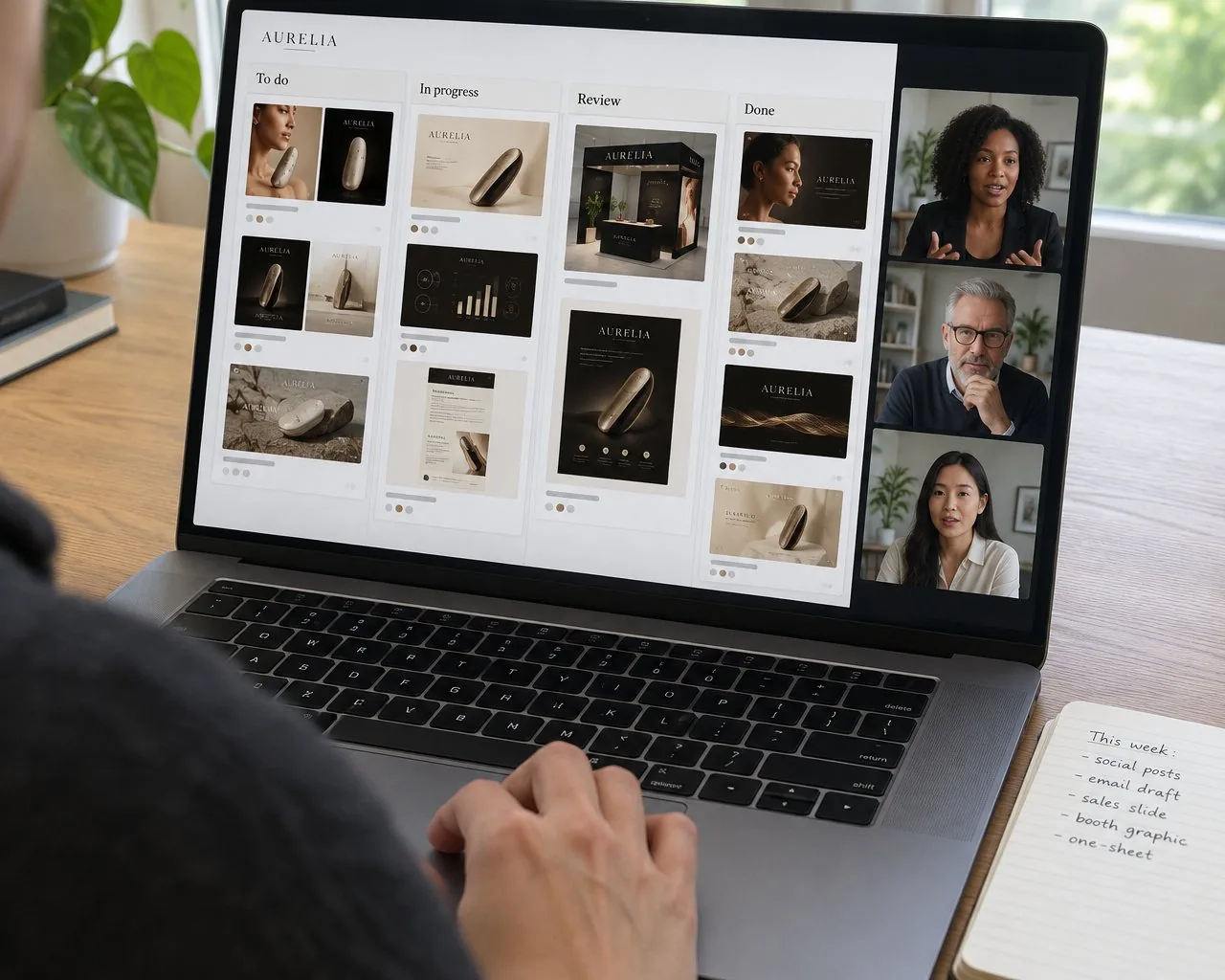
With the connector between Claude and Figma, designs land inside each brand system as real layouts, ready for review. That’s where AI output stops being text in a chat and becomes a finished asset.
Review every asset like a person made it.
Run AI-assisted content through the same clinical accuracy review as everything else. “The AI wrote it” is not a defense your regulatory team will accept. Don’t grade AI on a curve.
Go all in, or don’t start.
Dabbling gets you a post here and a draft there. A real production system that reliably outputs a month of content comes from operating it every day, on every project.
The stack
The three tools we run.
We’re not gatekeeping the stack. The tools were never the advantage. The thinking behind them is.
Claude, set up with Projects.
Build a project for every workstream, each with its own knowledge base of product specs, clinical positioning, voice and past content. It keeps learning your world, so every piece builds on the last.
A voice dictation tool.
Our team hardly types anymore. We use Wispr Flow, hold a button and talk, then let AI shape it. Every piece starts as a conversation, not a prompt, so it carries a real point of view.
Figma, as the content hub.
Figma is where collaboration happens. With the connector between Claude and Figma, we push designs straight into each client’s brand system as finished, on-brand assets.
The whole stack costs a couple hundred dollars a month. What it replaces cost tens of thousands.
The economics
What AI changes about a content budget.
Medtech content budgets never leaked through the finished films. They leaked through the front end: deciding what to make, building calendars, writing posts and articles, producing worksheets and website assets, all billed by the hour.
A month of content.
Social calendars, posts, blog articles, worksheets, sales enablement content and website assets, billed at agency rates across weeks of back and forth.
The same month, better.
The same volume for one of our clients on a retainer of a little over $5,000 a month, with a medtech creative director steering every piece. Teams that work this way produce five to eight times the content on the same budget.
Where AI still falls short.
The animation itself. Short clips, yes. A two-minute MOA, no.
Anyone who has spent time with image generation knows the ceiling. The first result is about 80% of what you wanted. Then you refine it, and it gets worse. Fix one detail and something else breaks.
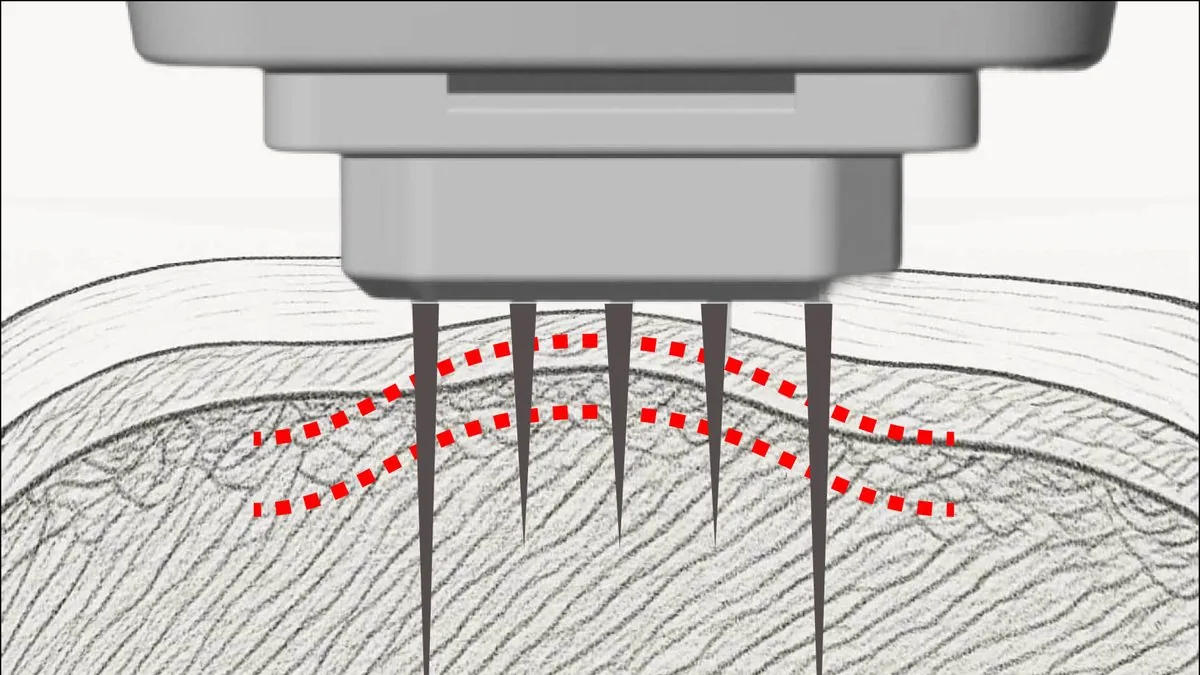
In consumer content that ceiling barely matters. In medical device animation, the last 20% is where the commercial value lives: clinical accuracy, mechanism specificity and how the device meets the anatomy. Get it wrong and the animation fails review.
AI is great for stopping the scroll. Educational content, the MOA a rep walks a physician through or the procedure video a clinical educator teaches from, has to be accurate, clear and hold up under review. That’s still human work.
Choosing a partner
Questions to ask a partner that uses AI.
- Where in your process do you use AI?
- Who reviews AI output for clinical accuracy?
- Who produces the finished animation?
- What does AI save us, and where does that saving go?
FAQs
Frequently asked questions about AI in medtech.
How should medical device companies use AI in marketing?
Use AI for the front end of content production: ideation, social calendars, posts, articles, worksheets, sales tools and website assets. Keep human creative direction and clinical accuracy review over everything that ships. Finished MOA animations, surgical visualizations and launch films are still traditional 3D production.
How much does AI reduce MedTech content production costs?
In our own production, a content load that would have cost $30,000 to $40,000 a month before AI now fits inside a retainer of a little over $5,000 a month. The savings come from removing the hours agencies billed as thinking time, not from cutting quality. Hero assets like MOA animations are budgeted separately. See pricing for details.
What AI tools should a MedTech marketing team use?
Three cover the core system: Claude set up with Projects, each with a knowledge base of your product and positioning; a voice dictation tool like Wispr Flow; and Figma as the content hub. The stack costs a couple hundred dollars a month. The discipline of operating it is what drives results.
Can AI create clinically accurate content for medical devices?
AI can draft it, but it can’t be accountable for it. AI-generated medical content often looks right at a glance and is wrong on close inspection, like tissue layer counts or how structures relate. Every piece should go through full clinical accuracy review, overseen by a creative director who answers for what ships.
Can AI produce a mechanism of action animation?
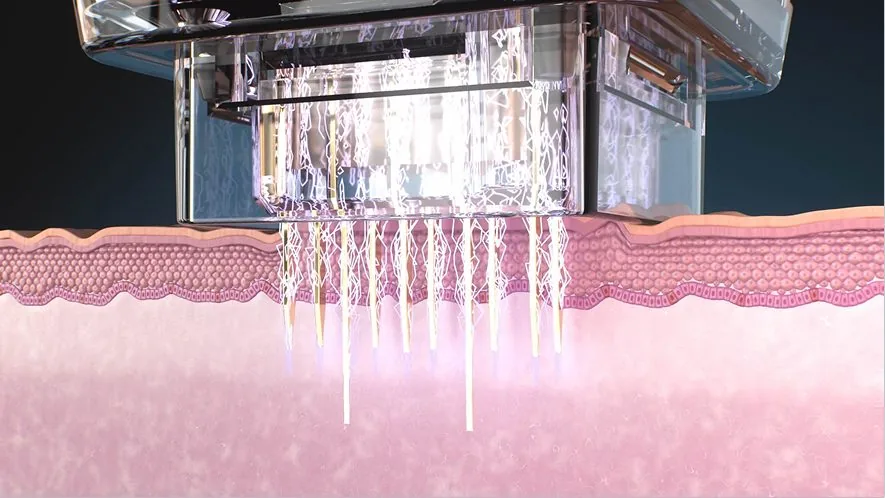
Not a finished one today. AI can produce impressive short clips of 5 to 15 seconds, and some are usable. A two-minute MOA for launch, sales or clinical education is a coordinated performance of animation, timing, lighting, texturing, compositing, voiceover, sound and color, and it’s still traditional pipeline work.
Why does AI content in MedTech often sound generic?
Because most teams feed it generic input. Typed prompts with no product context produce average output. The fix is on the input side: knowledge bases loaded with your product and clinical language, and dictated raw material with a real point of view. Template tools add to the sameness.
How do you evaluate a creative partner that says it uses AI?
Ask where in the process they use it, who reviews AI output for clinical accuracy, and who produces the finished animation. A partner using AI for meeting capture, storyboards, ideation and variation while keeping the finished work human is describing a real MedTech workflow.
Want AI working
for your launch?
Give us a few minutes, and we’ll walk you through the real math.