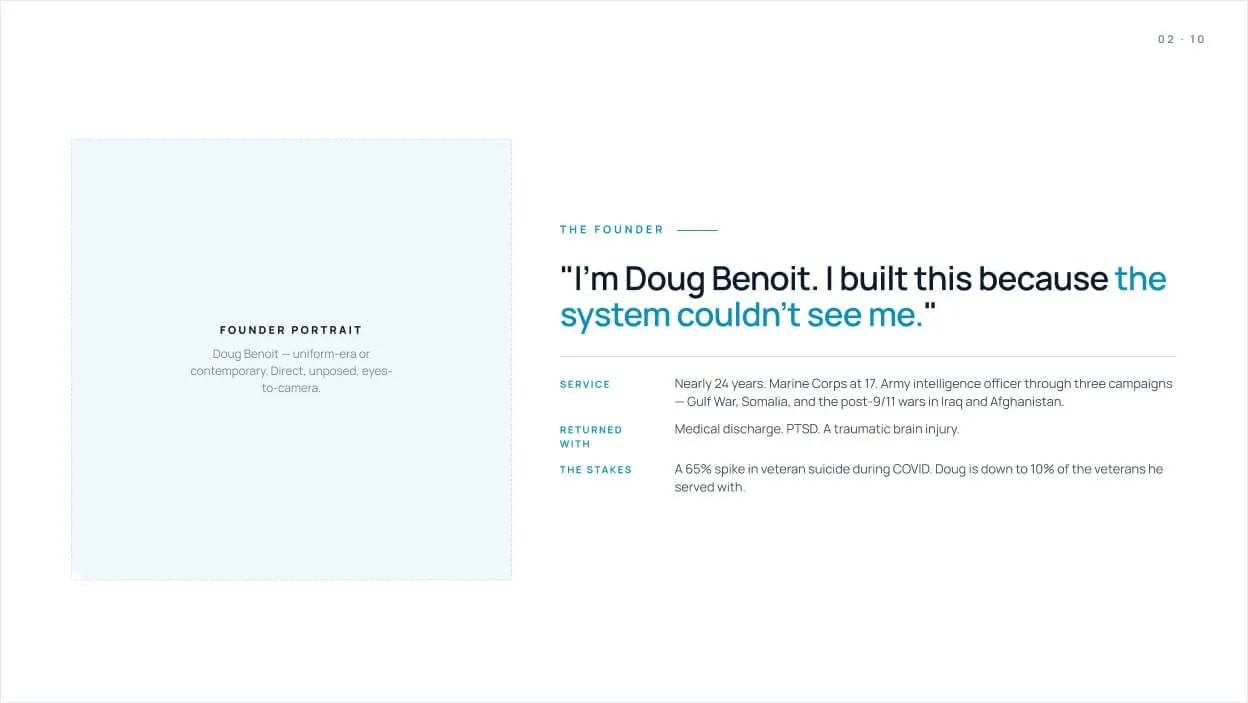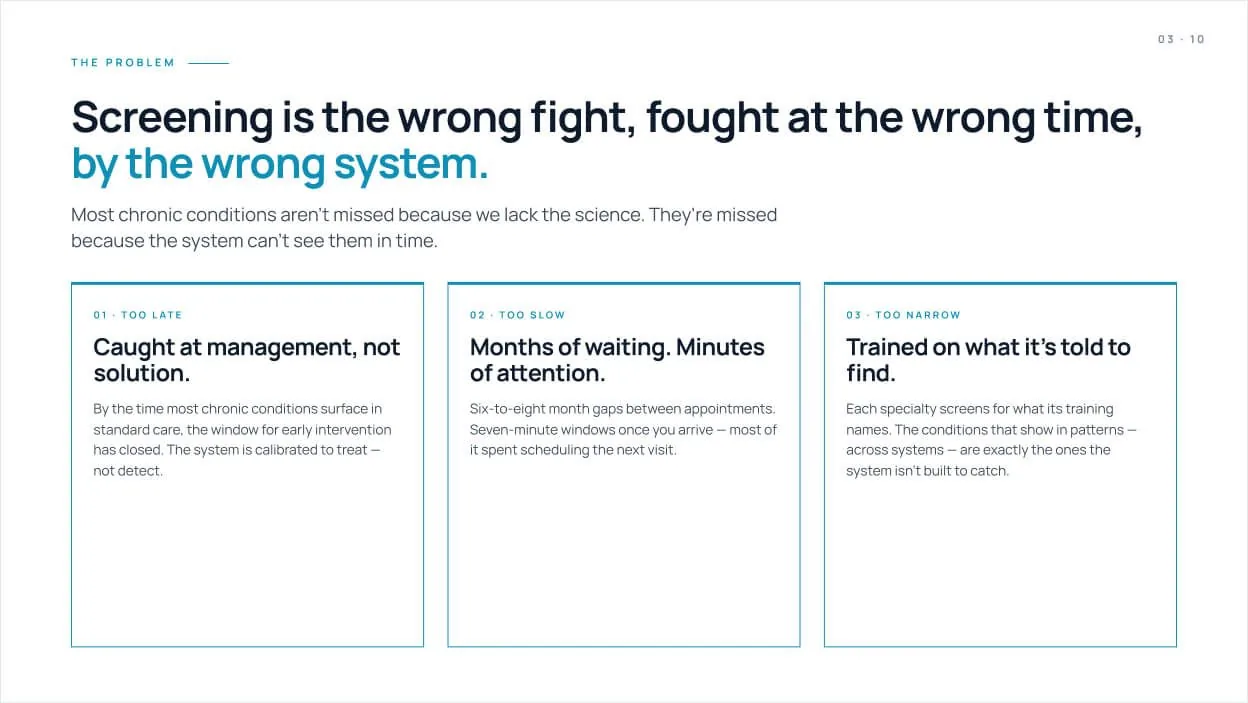
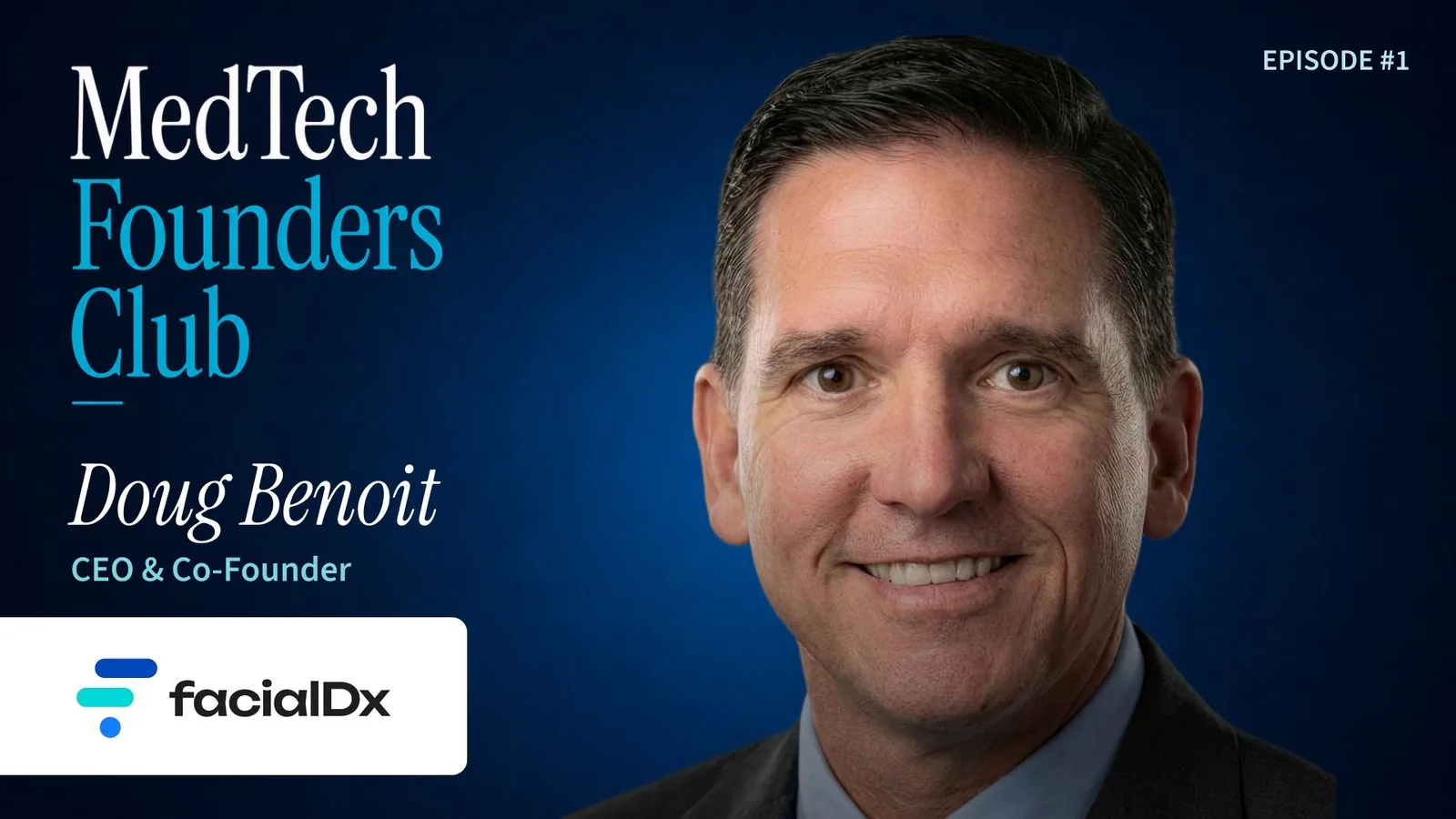
Doug Benoit joined the Marine Corps at seventeen and spent nearly twenty-four years in the military, later as an Army intelligence officer. After a medical discharge, he found himself waiting six to eight months between VA appointments, then spending most of a seven-minute visit booking the next one. He knew millions of veterans were living the same thing.
That frustration led to FacialDX, a non-invasive screening platform that uses AI to analyze biomarkers on the face. In this episode of the MedTech Founders Club, Doug talks with Tim Dingersen about how the idea started, how the technology works, where the company is focusing first and what he has learned building it.
From military intelligence to medtech founder
In the Marines, Doug specialized in small-team surveillance and target acquisition: gather information, analyze it and act on it. He started his first company in college, served again after 9/11, and his last military project was a training environment that let multiple agencies share actionable intelligence in real time. He sees that work as an early version of what FacialDX does today.
After his discharge, he earned a master's degree in finance and worked with small technology companies, learning business development, strategic planning and partnerships with much larger organizations.
The moment it clicked
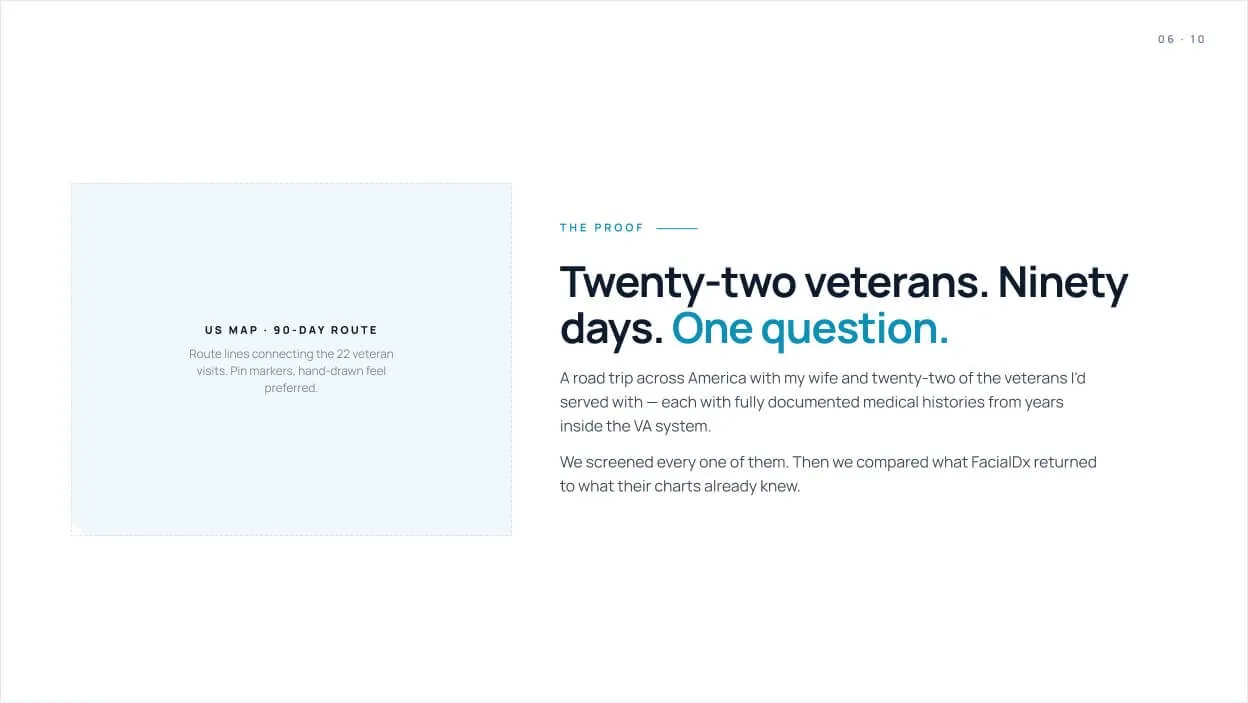
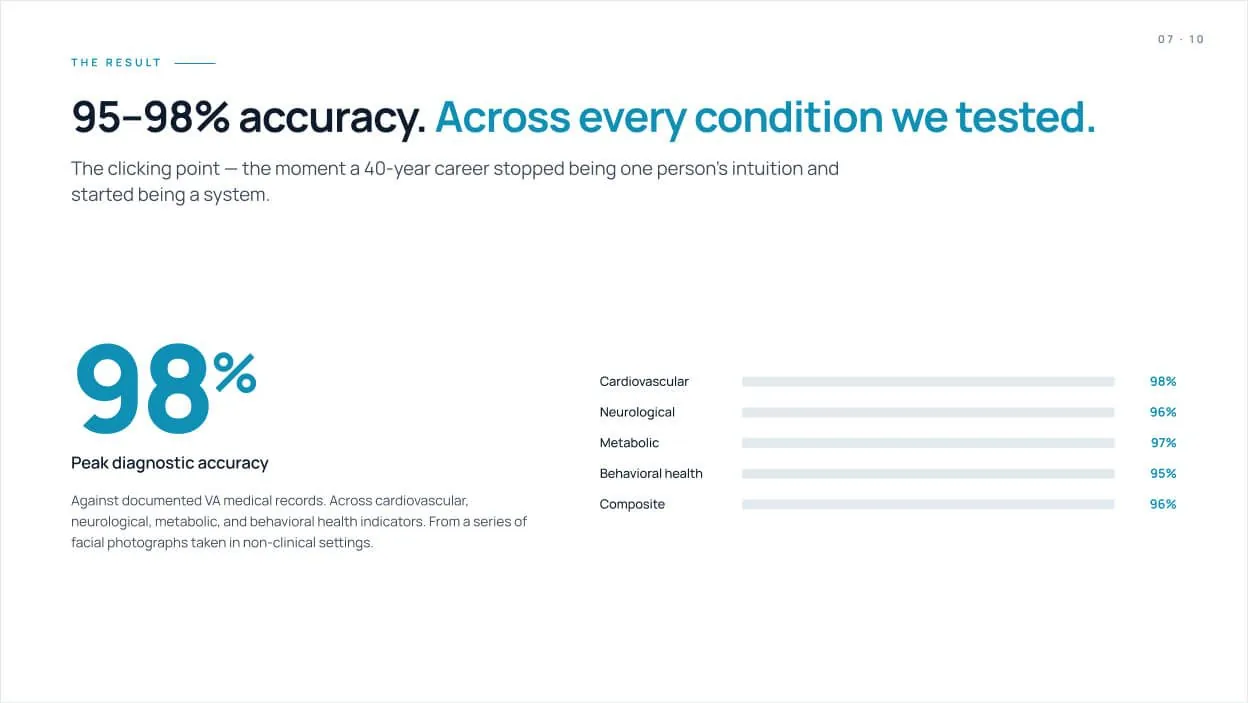
When a friend's colleague demonstrated facial analysis, Doug thought it was hocus pocus, until it read him like a book. He spent the next ninety days traveling the country with his wife, meeting twenty-two veterans he had deployed with, whose conditions were thoroughly documented by the military and the VA. Doug says the facial analysis matched their records with 95 to 98 percent accuracy.
“If we could automate this screening process, how many lives could we save?”
That result led to the question that started the company.
Supporting clinicians, not replacing them
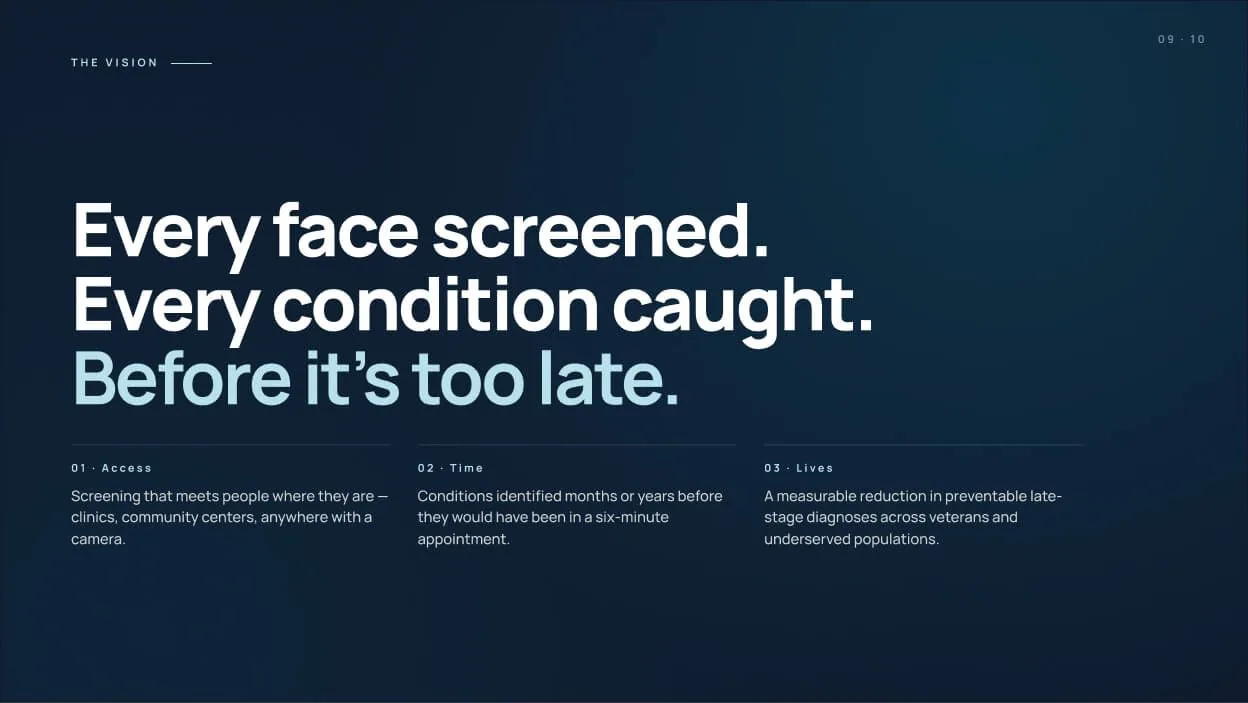
Doug is clear that FacialDX is not a diagnosis and not a replacement for doctors. The platform identifies features associated with health conditions so a clinician can ask more pointed questions in the first visit. The analysis could fill pages for each person, so the product's job is to surface what matters quickly.
“I always believe there is going to need to be medical professionals that are in there to make that final decision.”
In practice, he imagines a patient taking a few photos at check-in, with results on the doctor's screen before the patient reaches the exam room. Many intake questions could be answered before the visit starts. He sees it as complementing blood tests and physicals, not standing in for them.
How the technology works
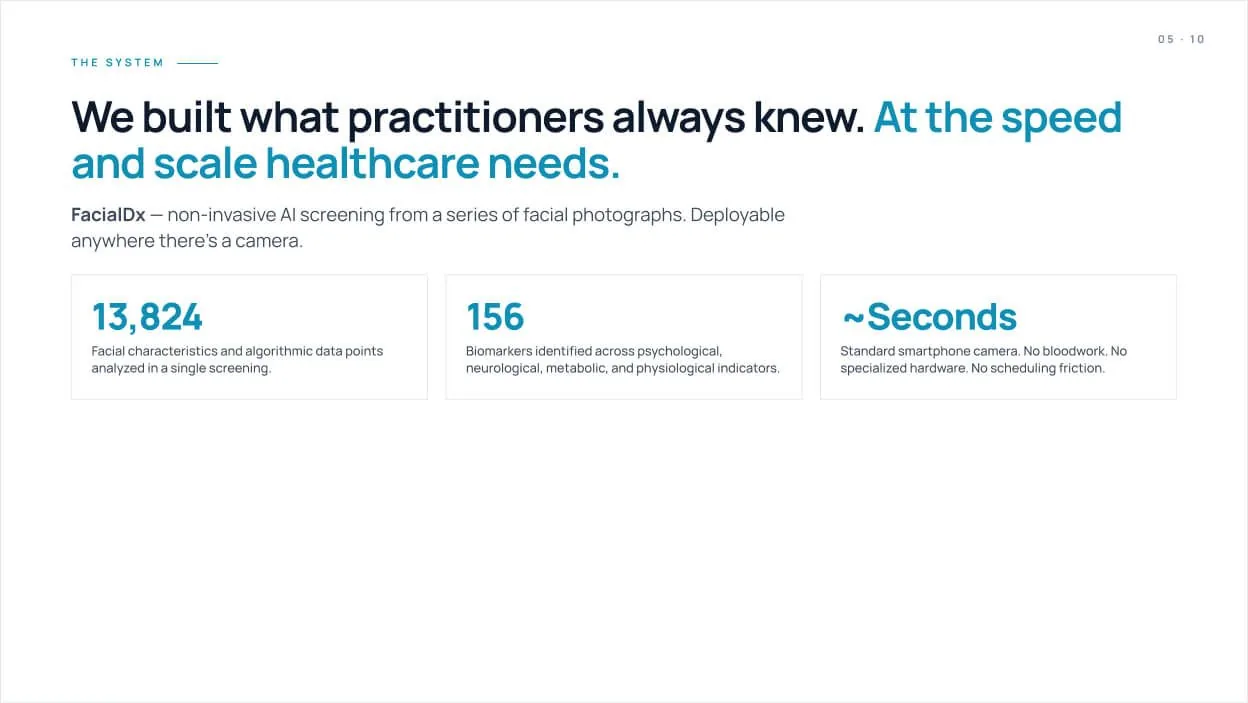
FacialDX analyzes 156 visible biomarkers on the face, the ones Doug says can be identified most reliably, across more than 13,000 algorithmic variables. The platform asks no survey questions and collects no personal history. Photos are processed in a HIPAA-compliant cloud environment and delivered as an API that plugs into an organization's existing workflow.
The company's foundation is a private database built from Western medical research and Eastern facial analysis practice, which Doug notes has been used in China for thousands of years. What FacialDX adds, he says, is objectivity and consistency, with results that don't depend on one practitioner's judgment on a given day.
Starting with the most receptive markets
Doug's first vision was the VA, but the most receptive early markets have been practitioners already open to combining Eastern and Western medicine, including holistic care, alternative medicine and regenerative health, with interest from Australia and Hong Kong. The company is pursuing distribution, white-label and licensing partnerships, and it launched its first consumer app in February.
Bootstrapped, then accelerated
FacialDX started on personal funds and favors. A large contract that kept getting delayed turned into what Doug calls a blessing in disguise, because the team used the time to move from five miles an hour to 150, building its own technology team and reaching HIPAA compliance for a fraction of what it costs many companies. Tim shared a similar experience bootstrapping Nuvue's platform.
Doug's advice for founders with a big idea
Get the idea out of your head and onto paper, then share it with people you trust and listen to their feedback, while weighing where that feedback comes from. If you have a spouse, bring them in early, because they share the risk. Use AI to help organize your thinking, but don't let it write for you, because it fills gaps with things that aren't true. And be prepared to hear why it won't work, then figure out how to fix it.
“Be prepared to hear why it won't work. And then find out how you can fix it.”
Key takeaways
- Start from a problem you have lived. Doug's own VA experience defined what FacialDX had to fix.
- Position technology as support for clinicians, not a replacement.
- Go first where the market is most receptive, even if it isn't where you first pictured.
- Get the idea onto paper and into conversation early, and filter feedback by its source.